ElkraHealthTech · AI-native neurology SaaS · 2024

We design AI to think like a neurosurgeon.

OutcomeCluttered MVP → AI-native platform in ~90 days. Domain-trained Copilot, ambient Scribe, unified patient surface, white-label-ready, real before/after receipts.

Imagine an EMR that thinks alongside the neurosurgeon.

Elkra is a white-label neurology practice management SaaS, clinics onboard via custom URL, brand it, and run it inside their own walls. The MVP worked. The UX hadn’t kept up. The founder, Dr. Ramy, brought us in to revamp every flow and bake AI into the platform as connective tissue, not a chat-bubble bolted on, but a Copilot trained on the clinic’s own protocols and a Scribe that recommends tests from a recording.

01Post-MVP, in-clinic users. A working product with real neurosurgeons depending on it daily. The redesign had to land without breaking the workflows already in production.
02AI as a layer, not a screen. The mandate was to integrate AI so deeply that clinicians stop noticing it, it just becomes how you find anything, how you document anything, how you decide anything.
03Roughly 90 days. Daily syncs with the founder and dev team. Audit, redesign, and AI integration shipping in parallel inside a single fundraising window.
★★★★★
Denovers walked in with my cluttered MVP and walked out 90 days later with an AI-native neurology platform our clinicians actually want to use. They embedded with our team, shipped with us daily, and treated AI as a layer instead of a screen, exactly how we needed it built.
Dr. Ramy El-Khoury
Dr. Ramy El-KhouryFounder & Managing Director · Elkra · AI neurology SaaS
Timeline~90 daysFull platform shipped. Every flow redesigned and a new AI layer introduced inside one product cycle.
AI surfaceNativeDomain-trained Copilot + ambient Scribe. AI as the navigation and documentation layer, not a chat bubble.
PatientOne umbrellaFive tabs to one card. Workflows, reports, protocols, scribe, clinic care, all under a single patient surface.
TenancyWhite-labelMulti-tenant from day one. Custom URL, branded UI, clinic-built forms, multi-license billing alongside.
The story

Bake AI in. Make the rest disappear. Roughly 90 days.

Elkra is the operational spine of a neurology clinic, patients, workflows, protocols, reports, scribe. The MVP worked. The UX hadn’t kept up. Dr. Ramy and the team brought us in to revamp every flow and bake AI into the platform, not a chat-bubble bolt-on, but a Copilot trained on the clinic’s own protocols and a Scribe that thinks like a clinician. The audit named four heaviest costs (cluttered nav, scattered patient info, untracked workflow status, AI as an island), and those four problems became the four chapters of the redesign.

One dedicated product designer embedded with Dr. Ramy and the dev team, daily syncs, no async hand-offs. Each surface was designed, reviewed, and built in the same week, with AI integrations scoped alongside the visual redesign so the Copilot and Scribe shipped as part of the platform, not on top of it. White-label support went in as the foundation: custom URL, branded UI, clinic-built forms, multi-license billing. Live inside the fundraising window.

ClientElkra · white-label neurology SaaS · Dr. Ramy
RegionUS
EngagementEmbedded designer + AI integration partner
StatusLive · AI-native · white-label-ready
01 · Design

One embedded product designer, daily with the founder.

Audit-led: catalogued where clinicians lost time, then redesigned the four problem surfaces in parallel with implementation. Every flow shipped reviewed and built in the same week.

02 · AI integration

Copilot + Scribe scoped alongside the visual rebuild.

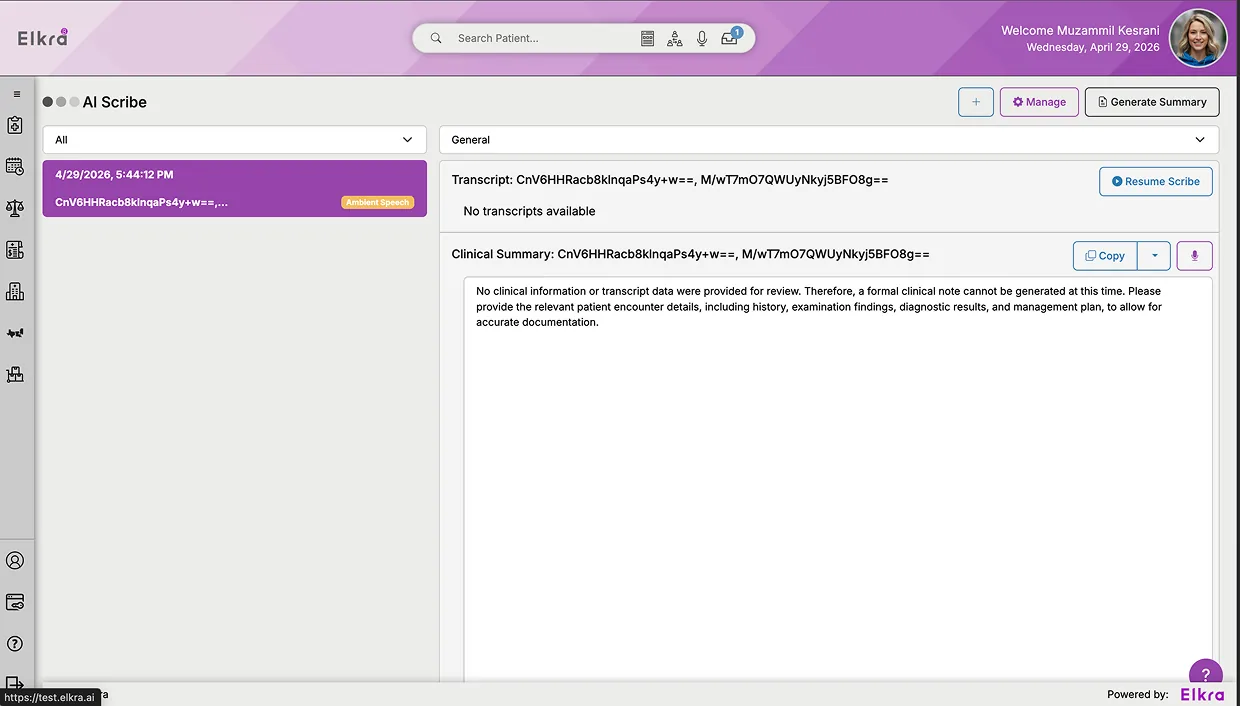
The Copilot trained on the clinic’s own protocols + the ambient AI Scribe with test recommendations were designed into the platform, not bolted on, so AI became the navigation and documentation layer.


Where we started

What we walked into.

A working MVP can hide a lot. The screens loaded, the data persisted, the basic flows completed, but the cost of using the product piled up everywhere a clinician’s attention should have been. The audit named four heaviest costs: cluttered navigation, scattered patient info, untracked workflow status, AI as an island. Each one paired below with the real before-shot from the MVP.

Before · cluttered MVP navigation with deep menu hierarchy
Cluttered navBefore
Before · scattered patient information across separate screens
Scattered patientBefore
Before · workflow status inferred from scattered fields with no timeline
Untracked workflowBefore
Before · AI Scribe stranded on its own screen disconnected from the rest of the platform
AI as an islandBefore
Chapter 01

The Copilot: AI as the way you find anything.

Discovery was the MVP’s biggest UX failure, clinicians knew Elkra had powerful features but couldn’t remember where they lived. Instead of redesigning a deeper menu tree, we made AI the navigation layer. The Copilot is trained on the clinic’s own protocols, reports, and patient data, so “which patients need an MRI in two days?” filters the list in one go, and dropping in a referral letter returns next-step recommendations. The chat surface replaces the menu tree.

AI CopilotChat surface · file upload · domain-trained queriesThe navigation layer
AI ScribeAmbient + dictation · summary + plan + test recommendationsThe recording layer
Chapter 02

One umbrella per patient.

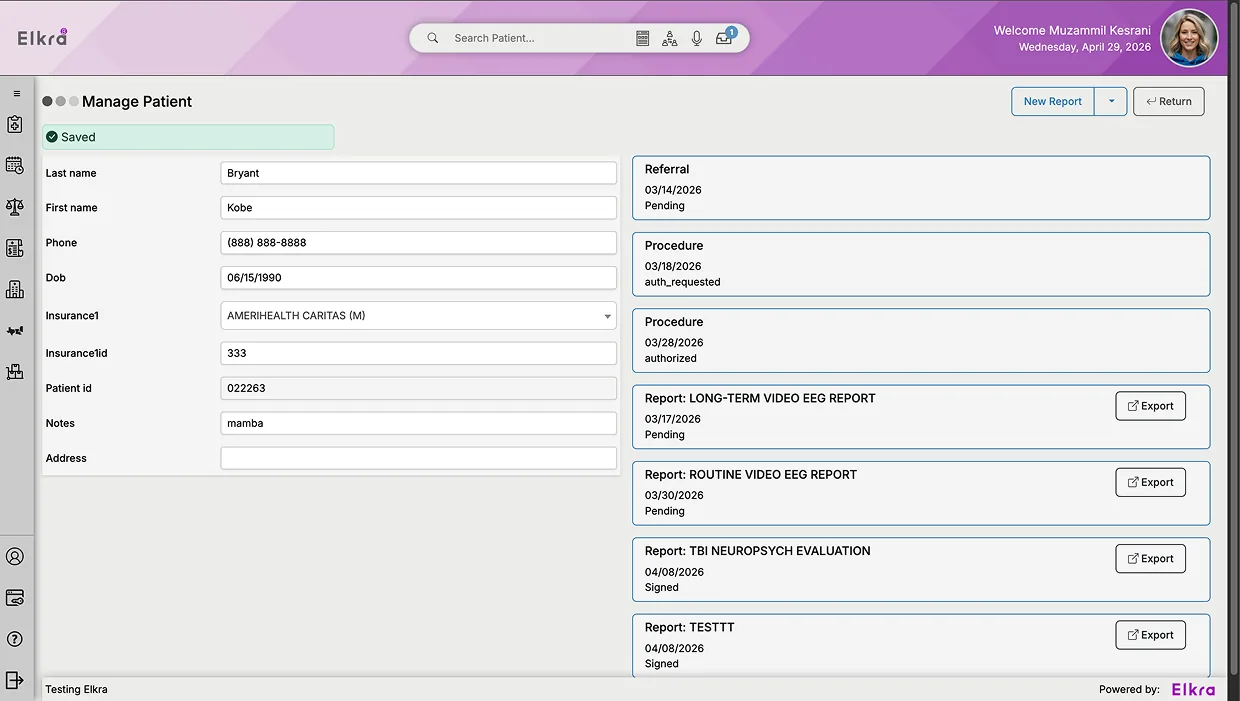
In the MVP, a patient lived in five places at once. Scribe, workflows, protocols, reports, each on its own screen. We rebuilt around one principle: the patient is the unit, not the feature. Every flow that touches a patient now lives inside that patient’s card, sections collapse inline, the Scribe records right there, the timeline stretches across the bottom, protocols and reports surface as tabs. The clinician opens one surface and gets the whole patient.

Patient overviewWorkflows + reports + protocols + AI Scribe · one surfaceThe unit
Chapter 03

The workflow timeline, and the Kanban above it.

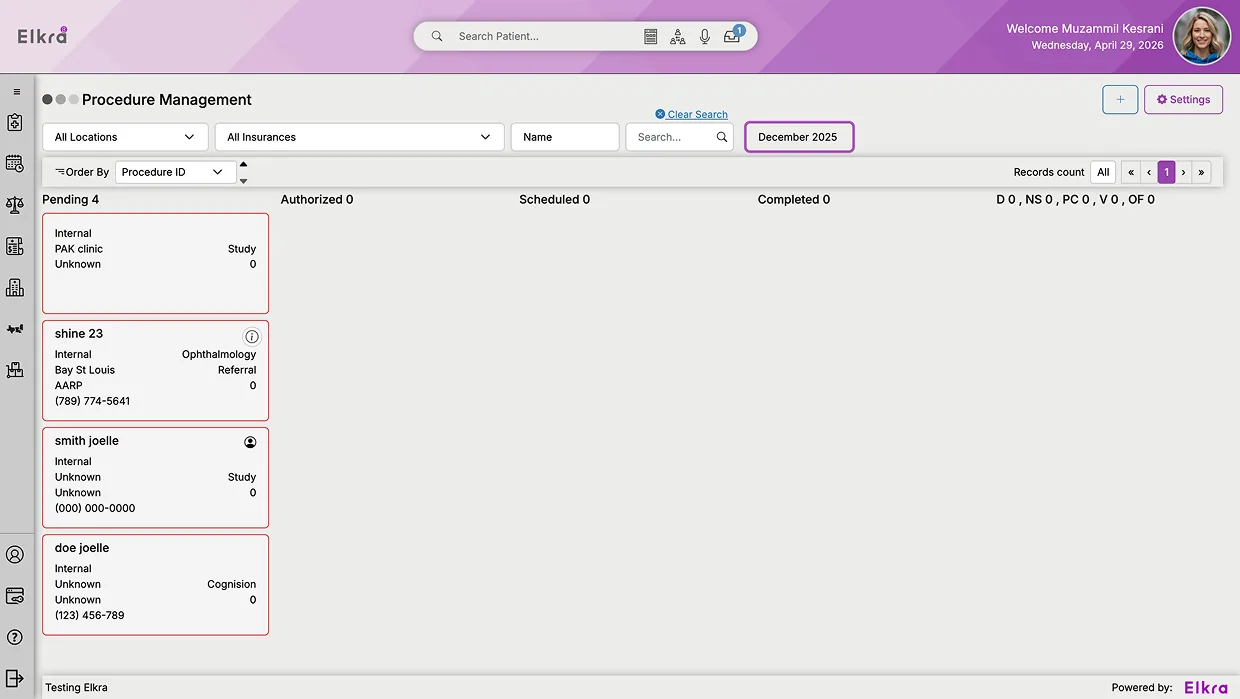
Healthcare workflows are state machines pretending to be checklists: ordered → authorized → called → scheduled → billed. The MVP inferred status from scattered fields. We rebuilt the workflow as an explicit timeline with each stage tracked, dated, and attributed; above it sits a Kanban management view that operates across every patient at once, so the coordinator sees every workflow and report that needs attention without clicking into each patient individually.

Workflow timelineOrdered → authorized → called → scheduled → billedPer patient
Kanban viewPending / in progress / done · cross-patient managementBird’s-eye
Chapter 04

Dashboard, form builder, and the white-label foundation.

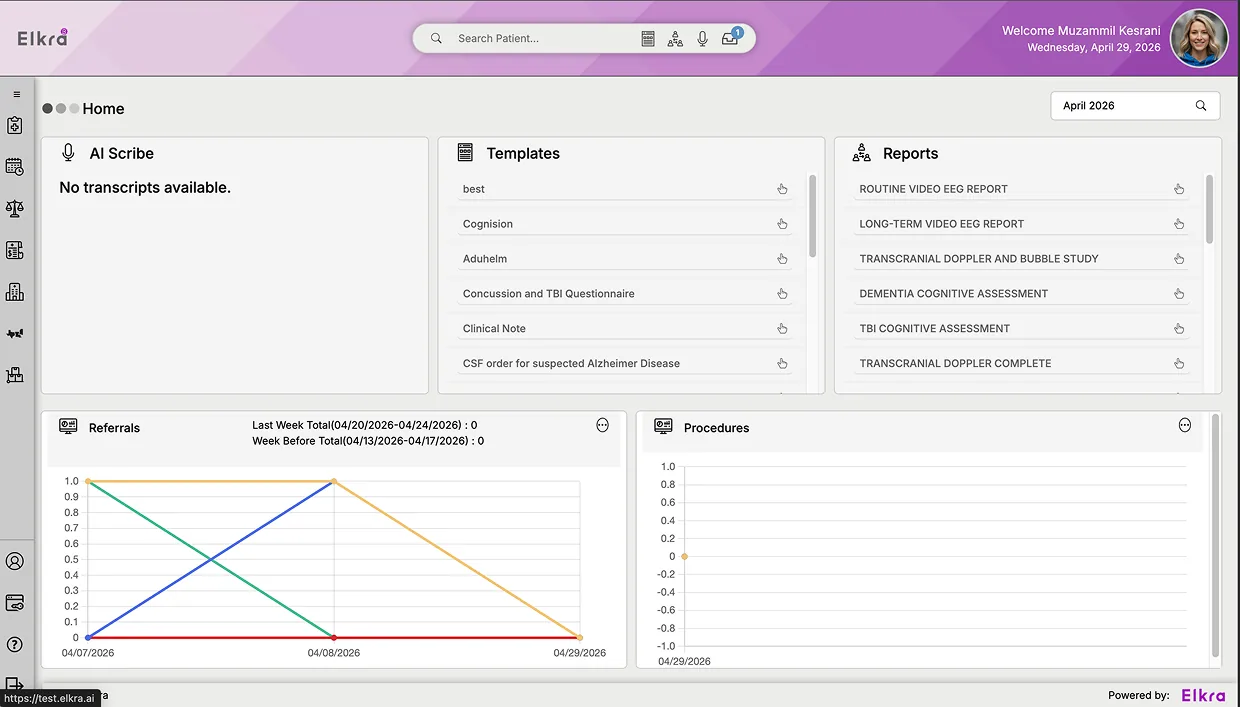
We collapsed several disconnected dashboards into a single aligned operating view. KPIs, weekly/monthly/yearly graphs, an insurance-provider breakdown that matters in the US clinical context, and recents across patients, workflows, reports, and AI Scribes. Then we shipped a drag-and-drop form builder, primitive blocks the clinic admin assembles into intake, follow-up, or post-op forms that feed downstream into reports and the timeline. The same engine powers the white-label rollout: custom URL, branded UI, clinic-built protocols.

DashboardKPIs · graphs · recents · insurance breakdownOne aligned view
Form builderDrag-and-drop blocks · text / title / input / dropdownWhite-label foundation
Outcome · AI-native · live · white-label-ready

MVP retired. AI-native platform live.

Roughly 90 days from audit to live: trained Copilot, ambient AI Scribe, unified patient surface, timeline-aware workflows, Kanban management view, custom form builder, multi-license billing. In clinics today, ready for the white-label rollout to additional neurosurgery practices.


Book a free sprint
Replies within one business day

Design the product users keep coming back to.

Tell us what you’re shipping and we’ll get back with a scoped sprint.

Book a free sprint
Get Started